
What does the Census Imply for Latino Leadership?
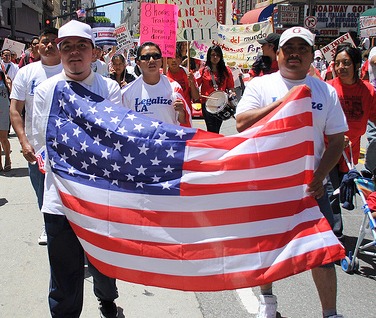 This is one of the vital discussions we need to be having, now.
There’s an interesting dynamic at play in the Latino community at large. To reiterate what we know: the Latino community has seen an unprecedented population growth; there’s a considerable increase in Latino political leverage; there’s been a sizable increase in the number of new Latino-owned businesses; most of the growth in Latino population has been because of birthrate; the Latino community is young and hardworking and poised to become the backbone of the US economy; Latino dropout rates and high school completion is dismally low; Latino entrance to and graduation from college lags behind other ethnic and/or cultural groups int he country. I could go on; we’ve been writing about all fo this at News Taco for months. But little, that I’ve seen, has been written and read about Latino leadership.
I’ve long been preoccupied with the quality of Latino leadership. As Latinos grow in political strength I think about the quality of the leaders that the Latino community will produce. We have some already; some promising, some good, some that have let us down, and some bums that rely on patrón-style machines to maintain their positions (don’t get me started, we have condescending caciques in our midst who use questionable practices to reward their followers and stay in power). My question is, what kind of leaders will the Latino community produce in the future?
That was the theme of a recent gathering of leaders and thinkers at the Harvard Law School: Harvard Latino Law, Policy and Business Conference. The main speaker was Cecilia Muñoz, Director of Intergovernmental Affairs at the White House. She told the audience that we’re living challenging times that are fraught with incredible opportunities.
“What Latinos want for the country is what every American wants – access to education and healthcare, and the ability for every human to fulfill his or her potential. But the difference now is that we’re in the position to be the agents of change that get us there, now that we’re the largest minority in America.”
That’s the key. All of the statistics of growth and education and entrepreneurial spirit point to the place, to the position; the question of leadership points to the choices that lie ahead.
The conference was hosted by students from the Harvard Kennedy School, the Harvard Law School and the Harvard Business School. Among the speakers was Louis Caldera, Vice President of Programs at the Jack Kent Cooke Foundation, who gave a somber warning:
“I’m the realist in the crowd,” he said. “So I’m going to tell you that the state of Latino leadership is abysmal, and it will take a lot of work to change that. There will be a lot of risk to the country if we don’t get it right.”
And as for the tired question of whether we have or need a national Latino leader, I like what Aida Alvarez, Administrator of the Small Business Administration in the Clinton Administration, said:
I would love to see a Latino President of the United States but I think it is critically important to not have only one Latino leader, because if we have one Latino leader, it means we have one issue. And if we’re only defining ourselves by one issue, a lot has been left unaddressed, and we become a unidimensional people.
The answer to the quality of Latino leadership isn’t to be found by looking for a leader. Edith Ramirez, Commissioner of the Federal Trade Commission, who also spoke at the conference hit the idea sweet-spot:
…while large-scale change like political leadership has come slowly and is still very much needed, incremental change is important as well. She encouraged audience members to make an effort to change simply whatever institution they currently find themselves in, which can come through mentorship.
Follow Victor Landa on Twitter: @vlanda
[Phot by Ray_from_LA]